A Father’s Sacrifice, A Family’s Legacy
How the values I inherited shaped my life—and inspired my love of family history

My grandparents in an old family photograph.
The roots of my story
I was born into a family where love was shown through sacrifice, responsibility, faith, and hard work. I grew up with an elder sister and a younger brother, and from an early age I saw that the opportunities we received were made possible by the choices and sacrifices of the people who came before us.
My father was a veterinary doctor. His own father had served in the military and believed deeply in the importance of education. My father carried that value forward. He had an elder sister and two younger brothers, and he felt a strong responsibility to help his siblings stand on their own feet. He was the one who completed his education and built a professional career, while also helping his sister and brothers find their own paths.
A father who chose our future
My father often told us that education was one of the most important things that could help a person build a better future. He wanted us to study in an English-medium school, even though a suitable school was not near the place where he worked in Kerala. The distance, the mountain roads, and the climate made daily travel difficult, so he made a decision that changed our lives: he rented a house in Theni, Tamil Nadu, near the Kerala border, so my mother, grandmother, and we children could stay there while he continued working.
For a time, my father lived apart from us and travelled to see us once in two weeks. I remember hearing how he would walk around 15 kilometres through the mountains to visit us. During school holidays, we would go to stay with him. Some relatives questioned why he was making such sacrifices, but his answer was simple: he wanted his children to have a better future. Looking back, I understand that those long walks and difficult choices were his way of saying, ‘I believe in you.’

A photograph of my father from his younger days.
Care is also a family inheritance
My father’s sense of responsibility was not limited to education. When my grandfather passed away in 1990 and my grandmother later became ill with cancer, he did everything he could to care for her, including taking her to Chennai for medical treatment. He did not give up on her. Those experiences showed me that family history is not only a list of names and dates; it is also a record of how people loved, served, and stood by one another.
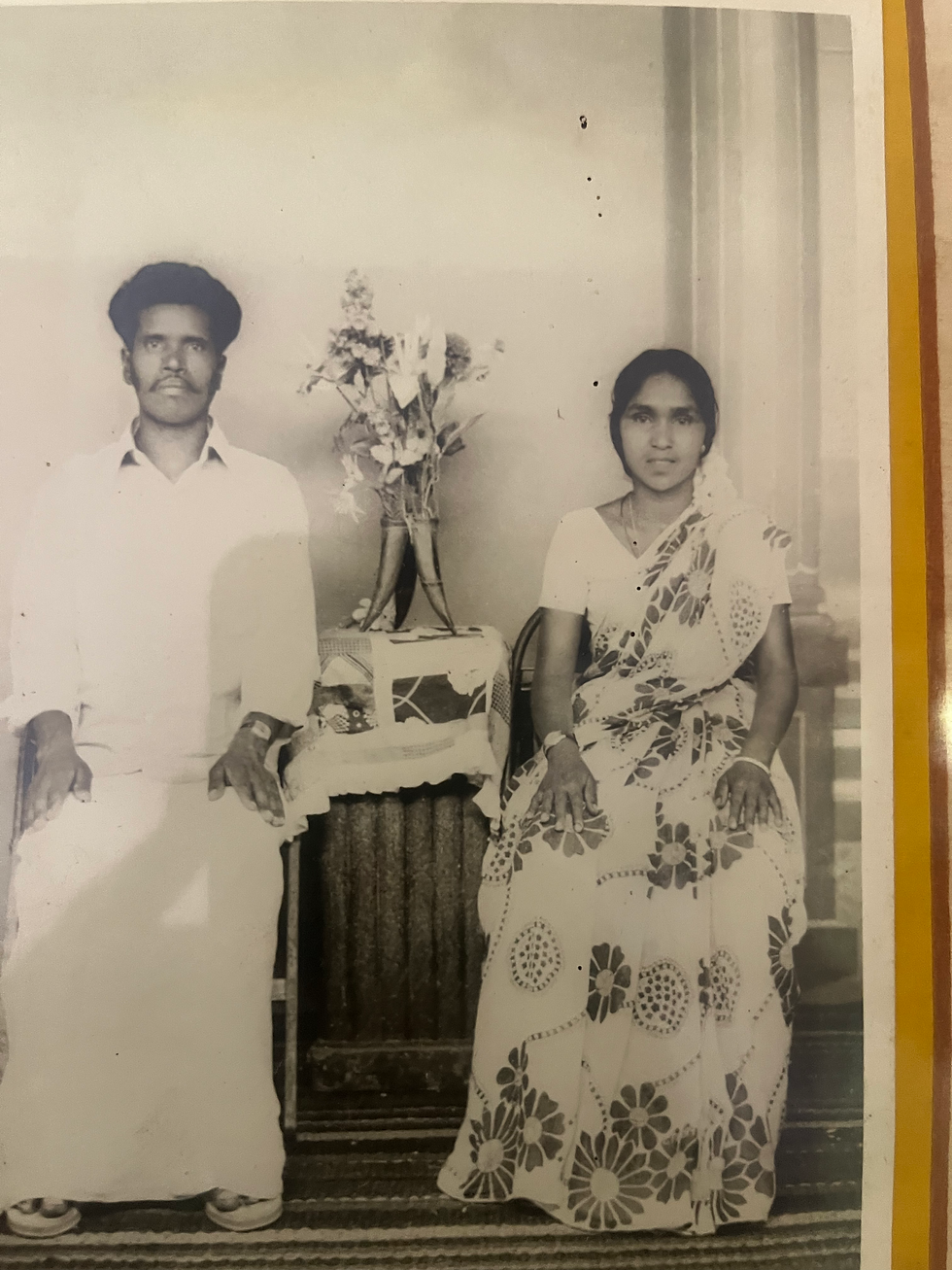
My Grandparents

An old marriage program becomes a historical document
When my father’s health weakened and he took voluntary retirement while I was in the tenth standard, my elder sister stepped forward to support my education and my younger brother’s. She made sacrifices of her own so that we could continue moving forward. My parents and sister each carried part of the family’s burden, and I learned that a family’s strength often comes from people quietly doing what needs to be done.
Small choices that taught me responsibility
While I was at school and college, I sometimes worked part-time because I wanted to reduce the financial burden on my family. My mother and sister did not always approve, and I sometimes kept the work from them because I wanted to help. At the time, I was simply trying to do my part. Today, I can see how those experiences shaped my sense of responsibility and independence.
Eventually, my siblings and I completed our education, found jobs, and began building our own lives. We moved to Coimbatore with our parents, and my sister married. Each of us followed a different path, but the values our parents taught us remained a common thread.

My sister, my cousin brother, and me during our childhood.
Faith, marriage, and a new chapter
I had a desire to serve others, so I left home for two years of volunteer service. That experience deepened my faith, changed how I saw people and their struggles, and taught me lessons I continue to carry into my life. When I returned, I began the next chapter with the woman I had dated for six years. We chose to marry even though I was still finding my way professionally. We planned a simple, budget-conscious wedding and began building our life together.
My wife has been a steady source of support in the decisions I make. Becoming a father helped me understand my own father in a new way. I began to appreciate more deeply the weight of his choices, the worry he must have carried, and the love behind the sacrifices he made for us.
Returning home when family needed me
After living in Delhi for about eight years, my mother was diagnosed with cancer. I wanted to be close to her and spend that time together as a family, so we moved back to Coimbatore. Being present for my parents was not an obligation I wanted to postpone; it was a chance to live the values I had learned from my father.
Today, my siblings and I continue to support our parents, and I hope my own children can see what that means. In my faith, the commandment to honour our father and mother has special meaning for me. I want my children to learn not only from what I tell them, but from how we care for the older generation in our family.

A family gathering—one of the simple ways we stay connected across generations.

A recent family celebration on my parents wedding anniversary and the next generation my son.
How family memories led me to genealogy
My interest in family history grew from these experiences. I want to preserve our records and learn about our roots. I started asking my parents about their childhoods, relatives, and memories. Those conversations helped me see that every family holds stories that can easily disappear if nobody asks the questions or records the answers.
I am now working on recording my parents’ memories on video so that my children can hear their stories in their own voices. I want them to know more than names on a family tree. I want them to understand the lives behind those names: where people lived, what work they did, what they believed, what challenges they faced, and how they cared for the people around them.
That is one reason genealogy matters so much to me. In many Indian families, information has been passed down orally, and photographs and documents may remain in homes without being identified, organised, or preserved. Finding those records can take patience and many conversations. But each photograph, document, and remembered story can help future generations understand who they are and where they come from.
A legacy I hope to pass on
My father used to say that education could give his children a better future. His sacrifices helped make that future possible, but the greatest lessons he gave us were not only about education or career. They were about taking responsibility, caring for our parents, supporting one another, and making choices for the good of the family—even when those choices are difficult.
The relatives who once questioned his decisions later came to appreciate the family he helped raise. For me, that is a powerful reminder that a person’s legacy is built through everyday acts of love and commitment.
As I continue exploring genealogy, I hope to preserve more of these stories and help others see the value of their own family histories. I am still learning, and there is much I do not yet know about earlier generations. But I know where I want to begin: by listening to the people who are still here, saving the memories they carry, and sharing those stories with our children.
A family tree tells us how we are connected. Family stories help us understand what those connections mean. I hope that, one day, my children and their children will look back and find not just our names, but the values, sacrifices, and love that helped shape our family.
— Robinson Jacob


Comments